
The relationship between psychiatric medications and addiction is a concern for many patients and their families, especially with the increased use of antidepressants, tranquilizers, and antipsychotics in treating mental disorders. While these medications are a lifeline for many, the fear remains: can they become addictive? In this article, we’ll examine in detail the relationship between psychiatric medications and addiction, how to distinguish between proper treatment and psychological or physical dependence, while answering the most important questions related to this topic.
What are Psychiatric Medications?
Psychiatric medications are a group of medical drugs used to treat mental and psychological disorders. They work by modifying brain chemistry and improving the balance between neurotransmitters like serotonin and dopamine. These medications don’t just treat mental illness directly, but help patients control symptoms and improve their daily quality of life. Psychiatric medications are divided into several main categories that differ in their functions and mechanisms of action.
1. Antidepressants
Used to treat depression and anxiety disorders and social phobia, they work by increasing serotonin or norepinephrine levels in the brain. Examples include: Selective Serotonin Reuptake Inhibitors (SSRIs) and tricyclic antidepressants.
2. Tranquilizers (Benzodiazepines)
Usually prescribed for severe anxiety, panic attacks, and insomnia. These medications work by calming central nervous system activity. However, they are among the categories that may cause psychological or physical dependence when used for long periods.
3. Antipsychotics
Used to treat schizophrenia, psychosis, and some cases of bipolar disorder. They work by affecting dopamine and serotonin receptors in the brain, reducing delusions and hallucinations and improving thinking and behavior.
4. Mood Stabilizers
Prescribed for treating bipolar disorder and severe episodes of mania and depression. They help stabilize mood and reduce severe fluctuations. Most notably “Lithium” and some anticonvulsant medications.
5. Sleeping Pills (Z-drugs)
Primarily used for treating insomnia and sleep disorders, helping patients fall asleep quickly and improve sleep quality. However, long-term use may lead to dependence.

The Relationship between Psychiatric Medications and Addiction?
Although psychiatric medications are primarily therapeutic, some types can lead to addiction if misused, such as taking higher doses than prescribed or for long periods without medical supervision. The relationship between them can be summarized in:
Possibility of physical and psychological dependence
Some medications like benzodiazepines (Xanax – Valium) can cause physical dependence with long-term use, making it difficult for patients to stop without withdrawal symptoms.Non-medical misuse
Some people take certain psychiatric medications like sleeping pills or tranquilizers to feel relaxed or euphoric, turning medical use into addiction.The line between treatment and addiction
The main difference is adherence to medical dosage and physician supervision. If the patient complies, the medication remains a safe therapeutic tool, but manipulating the dose or taking medication without prescription turns the relationship into addiction.
Most Dangerous Psychiatric Medications Associated with Addiction
Benzodiazepines: such as Xanax, Valium, Lorazepam.
Tranquilizers and sleeping pills: such as Ambien and barbiturates.
Opioid painkillers (when prescribed for some psychiatric conditions): such as morphine and hydrocodone.
How Can Psychiatric Medications be Prevented from Becoming Addictive?
Strictly follow doctor’s instructions and don’t increase or decrease dosage on your own.
Consult your doctor if withdrawal symptoms appear or if there’s a strong desire to increase the dose.
Never share medication with others under any circumstances.
Rely on psychological and behavioral therapy alongside medication to reduce the need for high doses.
Role of Addiction Treatment Centers
When psychiatric medication use turns into addiction, specialized medical intervention becomes necessary. Here, Al Sharq Center’s role as the best addiction treatment center in Egypt and the Arab world becomes prominent, offering safe medication withdrawal programs under medical supervision, along with psychological and behavioral rehabilitation programs that help patients recover and prevent relapse.
The relationship between psychiatric medications and addiction depends on how they’re used. If patients stick to medical doses and follow up with their doctor, they’re an effective treatment method. However, when misused, these medications transform from psychiatric treatment into a source of addiction requiring specialized intervention.
Do all Psychiatric Medications Cause Addiction?
This is a frequently asked question when discussing psychiatric medications and addiction. The truth is more nuanced than a simple yes or no answer; not all psychiatric medications cause addiction, and withdrawal symptoms when stopping don’t necessarily mean addiction. Understanding the differences between drug categories, and between “physical dependence” and “addiction,” is key to safe and effective use.
No, not all psychiatric medications cause addiction. Most antidepressants, antipsychotics, and mood stabilizers don’t create addictive behaviors when used medically and in correct doses. The greatest risk is associated with tranquilizers (benzodiazepines), sleeping pills, and some stimulants when misused or unnecessarily prolonged.
1. Psychiatric Medications not Typically Associated with Addiction
Antidepressants (like SSRIs and SNRIs): May cause “discontinuation symptoms” if stopped suddenly (dizziness, nausea, sleep disturbance), but don’t generate compulsive cravings or drug-seeking behavior.
Antipsychotics: Don’t cause euphoria or behavioral reinforcement leading to addiction. Rebound symptoms may appear with sudden discontinuation, but these differ from addiction.
Mood stabilizers (like lithium and some anticonvulsants): Need monitoring and tests, but aren’t inherently addictive substances.
2. Psychiatric Medications Associated with Addiction
The question of which psychiatric medications cause addiction remains in some people’s minds out of fear of psychiatric treatment. The answer is yes, some psychiatric medications can cause addiction if handled incorrectly away from medical supervision, such as:
Benzodiazepines (tranquilizers): Effective for acute anxiety and short-term insomnia, but quickly develop tolerance and dependence if duration is extended or dose increased. Sudden stopping may cause severe anxiety, tremors, and possibly seizures.
Sleeping pills (Z-drugs): Temporarily useful for insomnia, but continuing long-term may lead to psychological and physical dependence and difficulty sleeping without them.
Stimulants (ADHD medications like amphetamines and methylphenidate): Safe and effective under specialist supervision, but misusing them for performance enhancement or staying awake increases risk of dependence and substance abuse.
Opioids (when used for some accompanying pain): Not a primary psychiatric treatment, but may be used for patients with chronic pain; high addiction potential when misused.
The Difference between Dependence and Addiction
- Physical dependence: Means the body has become accustomed to the medication’s presence, and if the patient suddenly stops, withdrawal symptoms like insomnia, anxiety, and headaches appear.
- Addiction: Is a more comprehensive condition, including psychological and physical dependence, with compulsive drug-taking despite knowing its harms, and loss of control over stopping.
Personal Factors that Increase Addiction Probability
Previous history of drug abuse or alcohol.
Presence of a mental disorder accompanied by high impulsivity or seeking quick pleasure.
Social or family pressures that push the person to use medication as an escape.
Can a Person Become Addicted to Psychiatric Medications?
The likelihood of someone becoming addicted to psychiatric medications depends on the type of medication, duration of use, dosage, method of intake, plus individual factors like medical history or previous addiction tendencies. Therefore, we can’t say all patients are at risk of addiction, but there are cases where the risk is higher and requires special caution.
The transition from therapeutic drug use to a dependence or addiction problem doesn’t usually happen suddenly, but results from a series of behaviors and circumstances. The points mentioned – misuse, long-term use without medical follow-up, sudden discontinuation, and use outside medical supervision – are key factors that accelerate this transition. In the following lines, I’ll explain each point in practical detail: why it happens, how it affects the brain and body, warning signs, and most importantly – what the patient and doctor do for prevention and treatment.
1- Misuse (Taking Higher Doses than Prescribed)
The patient may feel the prescribed dose is “not enough” when tolerance develops, or seek to increase desired effects (calmness, euphoria, sleep), or try to treat untreated symptoms like persistent pain or uncontrolled anxiety. Sometimes misuse occurs out of desperation or misunderstanding how the medication works.
With repeated dose increases, receptor sensitivity and neural signal transmission change, and the brain needs higher doses to maintain the same effect. This leads to physical dependence and increases the chance of behavioral addiction. Dose increases can lead to acute toxicity (seizures, respiratory depression with tranquilizers and opioids), cognitive or behavioral disorders, dangerous drug interactions if there are concurrent medications or alcohol.
Requesting repeated doses before schedule, modifying dose without consultation, losing control over timing or amount, “doctor-shopping” behavior to seek more prescriptions.
Prevention and Handling Methods:
Educating patients about tolerance and dependence concepts.
Writing clear instructions and shorter prescription amounts with follow-up appointments.
Using the lowest effective dose for the shortest possible duration.
Implementing a treatment contract when necessary, and monitoring medications (reviewing taken medications, pill counting).
If misuse is discovered, don’t stop suddenly: contact the doctor to create a safe withdrawal or adjustment plan.
2- Long-term Use without Medical Follow-Up (Especially with Tranquilizers and Sleeping Pills)
Some patients start short-term treatment then continue with the medication because symptoms return or they fear losing benefits. Follow-up visits might not be requested by the doctor or ignored by the patient.
Extended use of benzodiazepines or Z-drugs can lead to memory deterioration, concentration problems, increased fall risk in elderly, crystallization of dependence, and later difficulty removing the medication. Poor follow-up also leads to absence of dose control or discovery of adverse interactions.
Prevention and Handling Methods:
Setting clear treatment duration when prescribing (e.g., short-term treatment for insomnia/anxiety) and periodic review.
Regularly evaluating the real need to continue and attempting gradual withdrawal when possible.
Promoting non-drug treatments like cognitive-behavioral therapy for treating anxiety and insomnia.
For elderly patients or those with comorbidities: periodically assessing fall risk and cognitive changes.
3- Sudden Discontinuation (Withdrawal) and its Lead to Relapse
Sudden stopping of a medication that has caused dependence leads to unpleasant or dangerous withdrawal symptoms, pushing the patient to resume taking the medication to relieve symptoms – this reinforces the cycle of dependence and relapse.
The nervous system adapts to the medication’s presence (change in neurotransmitter receptors), and in its absence, sudden disruption of neural network function occurs producing physical and psychological symptoms that vary by drug category:
Benzodiazepines: severe anxiety, insomnia, tremors, seizures in serious cases.
Antidepressants (some types): dizziness, electric sensations, sleep disturbance.
Opioids: flu-like symptoms, muscle pain, diarrhea, severe irritability.
Stimulants: severe fatigue and depression.
Withdrawal symptoms act as negative reinforcement – the patient returns to medication to stop suffering, and with each cycle the dependence strengthens.
Prevention and Handling Methods:
Don’t stop suddenly; discontinuation must be gradual according to a doctor-created plan.
High-risk patients (history of seizures or high doses of benzodiazepines/opioids) may need medical monitoring or facility admission during withdrawal.
Temporary alternative medications may be used to reduce symptoms in some cases under medical supervision.
Seeking psychological and social support during withdrawal to handle cravings and discomfort.
4- Use outside Medical Supervision (Taking without Prescription or Sharing Medications)
Medications may be easily available from relatives, friends, or online, and some use them to sleep quickly or eliminate temporary anxiety or even for experimentation. The social culture that minimizes some medications’ dangers increases the problem.
Not knowing the correct diagnosis leads to wrong treatment sometimes hiding an organic or psychological illness that needs different treatment.
Unexpected drug interactions if the user is taking other medications or alcohol.
Eliminating the chance to comprehensively evaluate and manage psychological symptoms (e.g., patient needs behavioral therapy not just a tranquilizer).
Prevention and Handling Methods:
Don’t share medications with others or take medications not prescribed to you.
Store medications in a safe place and dispose of excess properly.
Encourage patients to see a doctor instead of relying on non-medical sources.
If someone is discovered using outside supervision: comprehensive assessment of their psychological state and checking for substance use disorder, and creating a therapeutic and educational plan to reduce risks.
Personal Factors that Increase Addiction Probability
Previous history with drug abuse or alcohol.
Presence of a mental disorder accompanied by high impulsivity or seeking quick pleasure.
Social or family pressures that push the person to use medication as an escape.
Symptoms of Dependence or Addiction to Psychiatric Medications
After a period of incorrect use of psychiatric medications, a person may begin showing clear signs indicating the development of dependence or entering the addiction phase. These symptoms can be physical or psychological, and often overlap, making it more difficult to stop using without specialized medical supervision in addiction treatment centers.
1. Physical Addiction Symptoms:
Physical symptoms appear due to the body’s adaptation to the continuous presence of the medication and its dependence on it for normal functions. Most prominent symptoms include:
- Drug tolerance: Need for larger doses over time to achieve the same therapeutic effect.
- Withdrawal symptoms: When suddenly stopping, person may experience headaches, severe sweating, tremors, sleep disturbance, or seizures.
- Digestive system disorders: Such as nausea, vomiting, loss of appetite or constipation.
- Effects on heart and nervous system: Such as increased heart rate or persistent dizziness.
- General fatigue and weakness: Due to body’s depletion in trying to adapt to medication absence.
2. Psychological Addiction Symptoms:
The psychological aspect is often the hardest, as it relates to behaviors and feelings that make the patient attached to the medication. These include:
- Compulsive desire to take medication continuously and inability to control stopping.
- Anxiety and tension when dose is delayed or when trying to abstain.
- Depression and mood swings when medication leaves the body.
- Poor concentration and attention due to brain’s dependence on drug effect.
- Social withdrawal: Person may avoid events or activities fearing medication unavailability or withdrawal symptoms appearance.
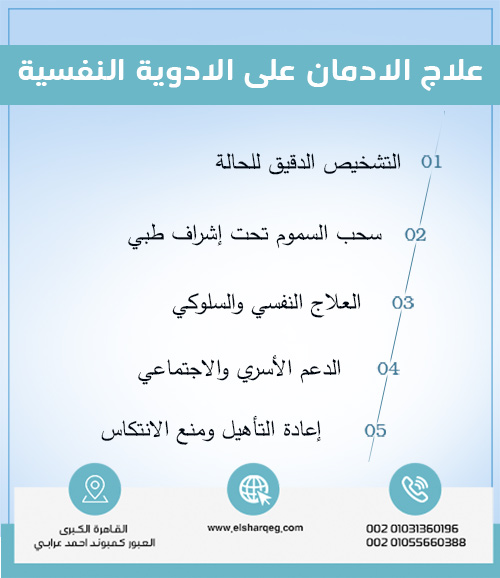
Treatment of Psychiatric Medication Addiction at Al Sharq Hospital
Despite the difficulty of psychiatric medication addiction, treatment is entirely possible with timely intervention and following an integrated treatment plan that includes medical, psychological, and behavioral aspects.
First: Accurate Diagnosis of the Condition
Treatment of psychiatric medication addiction begins with a comprehensive assessment of the patient’s condition to determine the type of medication causing dependence, duration of use, and symptom severity. This assessment helps doctors create an individualized treatment plan suitable for each patient.
Second: Detoxification under Medical Supervision
The process of medication elimination is done gradually in a safe environment to minimize disturbing withdrawal symptoms. In some cases, alternative or supportive medications may be used to reduce insomnia, anxiety, or mood disorders. This stage is very sensitive and must be done under specialized medical supervision.
Third: Psychological and Behavioral Therapy
After physical condition stabilizes, the patient begins cognitive behavioral therapy sessions to help understand their real motivations for incorrectly using psychiatric medications. Individual and group sessions also help develop skills for handling stress and avoiding thoughts of returning to medication.
Fourth: Family and Social Support
Family plays an important role in treating psychiatric medication addiction, helping provide a stable environment for the patient and contributing to monitoring their adherence to the treatment plan. Strong social support also reduces chances of relapse.
Fifth: Rehabilitation and Relapse Prevention
This phase includes long-term follow-up with the medical and psychological team, providing specialized relapse prevention programs, and teaching the patient healthy ways to deal with daily stresses without resorting to medications.
Treatment at Al Sharq Hospital Relies On
Al Sharq Hospital is one of the best centers in addiction treatment specializing in psychiatric medication treatment in the Arab world, offering:
Safe detoxification programs under comprehensive medical supervision.
Individual and group psychological and behavioral therapy sessions.
Rehabilitation and relapse prevention plans.
Family support and continuous follow-up to ensure recovery success.
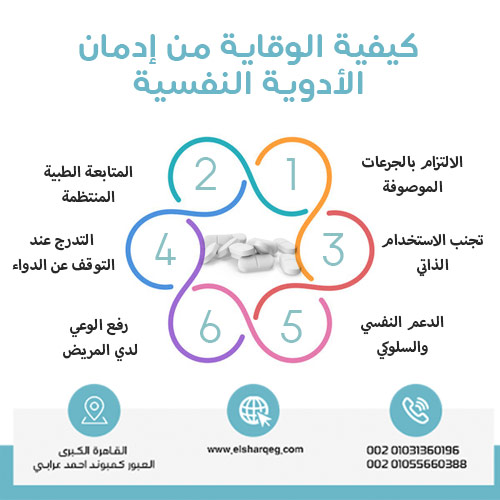
How to Prevent Psychiatric Medication Addiction
Although some psychiatric medications may carry the potential for dependence or addiction, prevention is entirely possible when adhering to medical guidelines and being aware of potential risks. Prevention doesn’t mean avoiding treatment, but rather using medication safely under medical supervision to achieve therapeutic benefits without falling into dependency.
1. Adherence to Prescribed Dosages
- Take medication only at the dosage and duration specified by the doctor.
- Avoid doubling doses when missed or in an attempt to speed up improvement.
- Do not modify dosage or stop medication without consulting your doctor.
2. Regular Medical Follow-up
- Visit the doctor periodically to monitor medication effectiveness and check for signs of dependence.
- Report any new symptoms or increased desire to take medication to the doctor.
- Undergo periodic examinations if necessary, especially when using sedatives and sleeping pills.
3. Avoid Self-medication
- Do not use any psychiatric medication without a prescription or specialist recommendation.
- Avoid trying medications used by friends or family members regardless of their justifications.
- Patients should understand that “sedatives or sleeping pills” are not a safe means of relaxation without medical supervision.
4. Gradual Medication Discontinuation
- Sudden discontinuation may lead to severe withdrawal symptoms that increase the risk of medication relapse.
- Discontinuation must be gradual according to a treatment plan set by the doctor.
- In some cases, the medication may be replaced with a less risky alternative to facilitate cessation.
5. Psychological and Behavioral Support
- Utilize psychotherapy or behavioral support sessions to address anxiety or insomnia instead of relying solely on medication.
- Involve family in the treatment plan to provide support and early detection of risky behaviors.
6. Raising Patient Awareness
- Educate patients and their families about the risks of psychiatric medication overuse.
- Spread awareness that these medications are not a means to escape problems, but part of a comprehensive treatment plan.
Psychiatric Medications and Addiction is a topic that requires significant awareness. While these medications provide effective treatment for millions of patients, their misuse can lead to dependence or addiction, especially with sedatives and sleeping pills. The optimal solution is to follow medical instructions, only take psychiatric medications under specialist supervision, and seek help from addiction treatment centers if signs of dependence appear.