
Pathological attachment disorder is a complex psychological condition that affects an individual’s ability to build healthy and stable relationships with others, and is considered one of the disorders that may begin in childhood and continue to impact the individual’s social and emotional life. Those affected by this disorder experience significant difficulties in forming trust relationships, causing them constant fear of abandonment or separation.
In this article, we will address pathological attachment disorder from all aspects: its origin, symptoms, effects on individual life, and how it can be diagnosed and treated. We will also explain the vital role played by Al Sharq Hospital, one of the best psychiatric treatment centers in the Middle East, in providing specialized support and treatment for those affected by this disorder.
What is Pathological Attachment Disorder?
Pathological attachment disorder is a psychological disorder that typically appears in early childhood and sometimes continues into adulthood, where the person experiences difficulties in building healthy and stable social relationships. This disorder is characterized by the individual’s inability to form normal emotional bonds with close people, resulting from painful childhood experiences or loss of primary emotional caregiver.
What are the Symptoms of Pathological Attachment Disorder?
Symptoms vary by age group and include:
Symptoms of Pathological Attachment in Childhood:
Refusing to interact with caregiver or parents.
Inability to self-soothe or respond to care.
Avoiding social interaction or seeking affection.
Severe anxiety when separating from close ones.
Symptoms of Pathological Attachment in Adolescents and Adults:
Difficulty trusting others.
Excessive fear of abandonment or separation.
Excessive attachment or social isolation.
Mood swings and impulsivity in personal relationships.
Constant feeling of emotional insecurity.

What are the Causes of Pathological Attachment Disorder?
Pathological attachment disorder is one of the complex psychological disorders that develops in early childhood and directly affects the nature of human relationships in later stages of life. To understand this disorder, it’s necessary to look deeply at its roots and fundamental causes, as the factors that form this dysfunction are often related to emotional deprivation, family environment, and psychological trauma.
1. Early Emotional Deprivation
Emotional deprivation in the first years of a child’s life is one of the main causes of pathological attachment disorder. When a child doesn’t receive sufficient love, affection, or containment from parents or caregivers, they develop feelings of emotional emptiness and fear of abandonment. This lack of basic emotional needs plants the seeds of constant anxiety and inability to form secure relationships in the future.
2. Neglect and Abuse
One of the prominent causes of pathological attachment disorder is exposure to neglect or abuse, whether physical or psychological. A child who experiences neglect feels unwanted or unimportant, leading to low self-esteem and loss of ability to feel secure. In cases of psychological or physical violence, this establishes a belief that relationships are a source of pain and danger, developing a pathological attachment characterized by fear or excessive attachment.
3. Early Separation from Parents
Sudden or prolonged separation from a parent due to divorce, death, or even work-related travel is one of the fundamental causes of pathological attachment disorder. A child in their early years needs a constant presence of a secure figure to rely on, and any early disruption in this relationship can create severe fear of loss that makes their future relationships filled with anxiety and excessive attachment.
4. Psychological Trauma and Childhood Abuse
Among the strongest causes of pathological attachment disorder is exposure to major traumas such as physical, psychological, or sexual abuse, or even the traumatic loss of a loved one. These harsh experiences lead to a dysfunction in the child’s perception of safety and leave a long-term impact on their trust in others. As a result, the individual may suffer from excessive attachment to partners or, conversely, aversion to any emotional relationship for fear of repeating the pain.
5. Family Environment Instability
Living in a disturbed family environment filled with marital conflicts, continuous violence, or frequent relocation is considered one of the strong causes of developing pathological attachment disorder. A child needs a stable and secure environment to help develop a sense of safety. When this stability is lacking, they become unable to form healthy bonds with others and continue to live in constant anxiety about losing relationships.
6. Parents’ Mental Illness
Pathological attachment disorder may develop in a child when one parent suffers from a mental disorder such as depression, borderline personality disorder, or even addiction. Having a parent unable to provide proper emotional care leaves the child in a state of deprivation and feeling of unimportance, which later reflects on their patterns of attachment to others.
7. Adoption or Moving between Care Homes
Children who experience repeated adoption or movement between different care homes are most susceptible to developing pathological attachment disorder. The absence of a constant figure for the child to rely on plants feelings of distrust and leads to dysfunction in their ability to form stable relationships with those around them.
8. Repeated Loss of Close Ones
Repeated exposure to losing close people whether through death or abandonment reinforces the child’s fears of loss. These experiences deepen the psychological wound and make them more susceptible to developing pathological attachment disorder, where they develop chronic anxiety that any new relationship is destined to end.
The causes of pathological attachment disorder are multiple and complex, beginning in early childhood due to emotional deprivation, neglect, trauma, or family instability. Environmental and psychological factors also play a major role in shaping the child’s personality and future relationships. Therefore, prevention of this disorder starts with providing a safe environment, filled with love and stability, along with proper handling of crises and psychological traumas from an early age.
How is Pathological Attachment Disorder Diagnosed?
Diagnosis is usually made by psychiatrists or mental health specialists through:
In-depth clinical interviews.
Collecting psychological and family history.
Using specialized psychological questionnaires and scales.
Observing patient behavior in their social environment.
Is Attachment to Someone a Mental Illness?
No, attachment to someone is not a mental illness in itself, but pathological attachment disorder is a psychological condition related to how a person builds relationships and becomes excessively or unhealthily attached to others.
Normal attachment is a natural part of human relationships, but when attachment becomes excessive and causes suffering, it may indicate a psychological disorder that needs evaluation and treatment.
Impact of Pathological Attachment Disorder on Personal Relationships
Pathological attachment disorder can significantly affect an individual’s ability to form and maintain healthy and stable personal relationships. People who suffer from this disorder often face problems in trusting others and fear separation or abandonment, which drives them to excessive attachment or complete isolation. This pattern of relationships negatively affects their social and professional lives, leading to constant feelings of loneliness and anxiety.
Additionally, this disorder may cause difficulties in expressing emotions and effective communication, which increases the intensity of conflicts and misunderstandings in family and emotional relationships. Therefore, understanding the nature of this disorder and its effect on social behavior helps in developing effective strategies for dealing with and supporting it.
What is the Pathological Attachment Test?
The pathological attachment test is a diagnostic tool used by psychiatrists and psychologists to assess how much a person is affected by pathological attachment disorder. The test relies on a series of questions and questionnaires aimed at measuring attachment patterns, such as the individual’s ability to build trust relationships and their level of anxiety about separation or abandonment.
The test typically includes evaluating the patient’s behaviors in personal relationships, their response to social situations, and the frequency of pathological attachment symptoms such as excessive fear of losing close ones or social isolation.
Test results help determine the severity of the disorder and guide the appropriate treatment plan for each case, and are considered an important step in the recovery journey from pathological attachment disorder.
How to Treat Pathological Attachment Disorder?
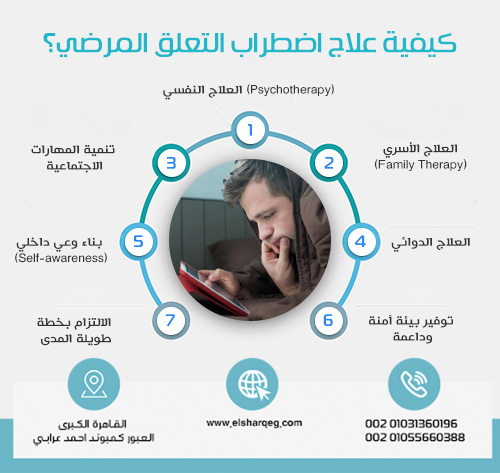
Treatment of pathological attachment disorder at Al Sharq Hospital, the best hospital for psychiatric treatment and addiction treatment in Egypt and the Arab world, goes through 7 main stages:
1. Psychotherapy
Psychotherapy is the cornerstone in treating pathological attachment disorder, helping individuals recognize unhealthy attachment patterns and understand their roots. Among the most prominent types of psychotherapy used:
Cognitive Behavioral Therapy (CBT): Focuses on modifying negative thoughts related to relationships and transforming them into more positive thinking patterns.
Dialectical Behavior Therapy (DBT): Teaches patients how to manage extreme emotions that accompany pathological attachment.
Attachment-based Therapy: Aims to rebuild the individual’s concept of safety and trust through the therapeutic relationship itself.
This type of treatment gives the person with pathological attachment disorder an opportunity to reshape their feelings and build more balanced and healthy bonds.
2. Family Therapy
In many cases, the roots of pathological attachment disorder are connected to the family, therefore involving the family is a pivotal part of treatment.
Family therapy helps improve communication methods between individuals.
Helps parents or partners understand the nature of the disorder and deal with it properly.
Reduces internal conflicts that increase symptom severity.
Thus, family support not only treats the roots but prevents relapses and strengthens healthy emotional bonds.
3. Social Skills Development
One of the important methods in treating pathological attachment disorder is training the patient on social communication skills and healthy interaction with others.
Learning to set personal boundaries.
Building gradual trust in relationships.
Reducing excessive dependence on partner or family.
Practicing group activities that promote social openness.
These skills restore the individual’s self-confidence and break the cycle of excessive attachment or severe isolation.
4. Medication Treatment
In some cases, treating pathological attachment disorder may need medication support, especially if accompanied by other disorders such as anxiety or depression. Doctors use antidepressants or anti-anxiety medications to help reduce accompanying symptoms, but they don’t treat the disorder itself directly, rather they prepare the patient to better benefit from psychotherapy.
5. Building Self-awareness
One of the effective methods in treating attachment disorder is developing an individual’s awareness of their feelings and behaviors. This is achieved through:
Journaling to express emotions.
Practicing meditation and Mindfulness exercises.
Recognizing and analyzing past relationship patterns to understand mistakes and avoid repeating them.
This awareness helps the patient break free from unhealthy thinking and behavioral patterns.
6. Providing a Safe and Supportive Environment
For attachment disorder treatment to succeed, the individual needs a supportive environment filled with love and stability. When a person feels the presence of a strong support network from family, friends, or even the therapist, they become more ready for change and overcoming relationship-related anxiety.
7. Commitment to a Long-term Plan
Treating attachment disorder doesn’t happen overnight; it requires a long-term commitment. The patient needs continuous follow-up, periodic progress evaluation, and reinforcement of any positive steps achieved.
The treatment of attachment disorder relies on a combination of psychotherapy, family support, social skills development, and possibly medication when needed. Success in treatment is largely linked to the patient’s commitment to therapy and the provision of a safe and supportive environment. Over time, individuals can learn how to form healthy relationships based on trust and mutual respect, moving away from unhealthy attachment.
Al Sharq Hospital’s Role in Treating Attachment Disorder
Al Sharq Hospital, the best hospital for psychiatry and addiction treatment, plays a leading role in providing comprehensive psychological treatment and support for attachment disorder cases, combining medical expertise and social environment to provide:
Specialized treatment programs focusing on building healthy relationships.
A multidisciplinary team providing comprehensive care covering psychological, medical, and social aspects.
A safe therapeutic environment that respects patient privacy and supports them professionally.
Providing continuous support after treatment completion to ensure patient integration into society and achieve lasting psychological stability.
Are there Medications for Treating Attachment Disorder?
Treatment of attachment disorder primarily relies on psychological therapy and behavioral support, but in some cases, doctors may resort to using medications as part of the treatment plan, especially if the disorder is accompanied by other symptoms such as anxiety or depression.
1. Antidepressant Medications
Used in cases where depressive symptoms accompany attachment disorder, such as Selective Serotonin Reuptake Inhibitors (SSRIs), to help improve mood and reduce anxiety.
2. Anti-anxiety Medications
May be prescribed to treat anxiety attacks or severe tension that the patient may experience, aiming to calm psychological symptoms and improve quality of life.
3. Mood Stabilizers
In some cases accompanied by mood swings or impulsivity, mood stabilizers such as lithium or some anticonvulsants may be used.
It is very important to go to a specialized psychiatric treatment hospital like Al Sharq Hospital when dealing with pathological attachment disorder or any other psychological disorder. The medications used to treat symptoms accompanying this disorder are not solutions to be taken randomly, but need accurate evaluation by a specialized psychiatrist.
Taking these medications without medical supervision can lead to serious health complications, worsening symptoms, or even addiction to some medications. At Al Sharq Hospital, patients are continuously monitored to ensure treatment effectiveness and adjust doses as needed, while providing complementary psychological support to ensure comprehensive and safe recovery.
How to Deal with People with Pathological Attachment Disorder
Dealing with people who suffer from pathological attachment disorder requires deep understanding of the disorder’s nature and great patience, as their reactions are highly emotional and sensitive. Here are some important tips for dealing with them effectively:
Being Patient and Understanding: It must be considered that their behaviors may be a result of their fear of abandonment, so it requires a lot of patience and not judging their actions quickly.
Open and Clear Communication: Maintaining honest and sincere communication helps build trust and reduce their anxiety.
Providing Continuous Emotional Support: Showing constant empathy and attention makes them feel safe and stable.
Avoiding Situations That May Increase Their Feelings of Rejection or Abandonment: Such as sudden withdrawal or ignoring, which may increase the severity of disorder symptoms.
Encouraging Them to Seek Professional Help: Such as specialized psychotherapy that helps them face the challenges of the disorder in a healthy way.
By following these methods, a supportive environment can be created that helps those affected progress in their treatment and build healthier and more stable relationships.
The Role of Family in Supporting those with Pathological Attachment Disorder
The family plays a pivotal role in the journey of treating and supporting people with pathological attachment disorder. It provides the safe environment that the patient needs to build trust and overcome emotional difficulties. Through understanding and patience, the family can help alleviate feelings of anxiety and fear of abandonment that the patient suffers from.
Family participation in psychotherapy sessions and family support enhances family members’ ability to understand the nature of the disorder and deal with the patient in a positive and motivating way. Having continuous emotional support and encouragement for open expression of feelings helps build deeper and stronger bonds, which contributes to enhancing the patient’s psychological stability and speeds up the recovery process.
Pathological attachment disorder is a psychological challenge that requires specialized attention and treatment to ensure improving the quality of life for those affected by it. Thanks to the great efforts made by Al Sharq Hospital, patients can now receive the necessary care and support to build healthy and stable relationships that enhance their psychological and social balance.