
Psychological rehabilitation for recovering addicts is one of the most important stages in the addiction treatment journey. It may be the decisive factor in successful and sustained recovery. After completing detoxification and physical treatment, the psychological aspect remains the biggest challenge, as internal conflicts, desire to return, and emotional void emerge, threatening the recovering person with relapse at any time.
Therefore, psychological rehabilitation steps aim not only to support emotional and behavioral stability but also include rebuilding self-confidence, teaching life skills anew, and providing a healthy environment that helps in dealing with real-life pressures without resorting to drugs. In this article, we detail the most important stages and steps of psychological rehabilitation for recovering addicts, the role of family and society in supporting them, and how specialized centers can play a crucial role in protecting them from relapse.
What is Psychological Rehabilitation for Recovering Addicts?
Psychological rehabilitation for recovering addicts is a set of therapeutic processes aimed at psychologically and behaviorally rehabilitating the person after completing the physical treatment phase of addiction. This rehabilitation focuses on stabilizing the recovering person’s psychological state, addressing the psychological causes that led to substance abuse, and teaching new skills to help them face daily pressures without resorting to drugs or addictive substances.
Psychological rehabilitation includes multiple therapeutic sessions, such as cognitive behavioral therapy, group therapy, and psychological support sessions, which contribute to strengthening self-awareness and willpower, making the recovering person more capable of resisting urgent desires or negative emotions that might lead to relapse.
Steps of Psychological Rehabilitation for Recovering Addicts
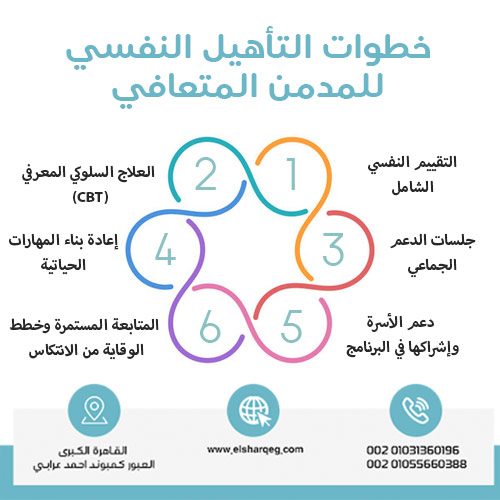
Many recovering addicts ask about the steps of psychological rehabilitation after addiction. The process of psychological rehabilitation for recovering addicts goes through several integrated stages aimed at building a new personality for the recovering person, free from substance dependency, and more balanced psychologically and socially. Here are the main steps included in this type of rehabilitation:
1. Comprehensive Psychological Assessment
Before starting any treatment plan, a comprehensive assessment of the recovering person’s psychological state is conducted. This assessment includes understanding the addiction history, previous traumas, mood state, and accompanying psychological illnesses – such as depression, anxiety, or personality disorder.
2. Cognitive Behavioral Therapy (CBT)
Cognitive behavioral therapy is one of the most successful methods used in psychological rehabilitation. This type of therapy helps:
Modify negative thinking patterns
Identify relapse triggers
Teach effective strategies for dealing with emotions and stress
3. Group Support Sessions
Joining support groups (such as “Narcotics Anonymous”) is considered a strong step to enhance psychological recovery.
These groups provide a supportive and safe environment
Allow sharing experiences with people who have gone through similar experiences
Make the recovering person feel they’re not alone
4. Rebuilding Life Skills
One of the most important aspects of psychological rehabilitation is teaching the recovering person life skills that help them deal with life’s pressures without needing to escape through drugs, such as:
Problem-solving skills
Time and stress management
Communication and relationship building skills
5. Family Support and Program Involvement
The family environment is often one of the influential factors in falling into addiction or relapse. Therefore:
Family members are advised to participate in family therapy sessions
They are educated on how to support the recovering person and avoid pressuring them or reminding them of the past
6. Continuous Follow-up and Relapse Prevention Plans
Even after leaving the treatment center, there should be a regular follow-up system that includes:
Regular sessions with the psychotherapist
Written plan for dealing with relapse

How Does Psychological Rehabilitation Help Prevent Relapse?
Psychological rehabilitation for recovering addicts plays a vital role in preventing relapse because it addresses the psychological roots that were behind falling into addiction in the first place. Through individual and group psychological sessions, the recovering person learns how to deal with tension, anxiety, and triggers that might push them back to substance use.
Psychological rehabilitation also helps in:
Enhancing self-awareness: For the recovering person to understand their negative thinking and behavioral patterns.
Building coping skills: Such as facing pressures and solving problems without resorting to escaping through drugs.
Providing continuous support: Through the therapist or support groups, which reduces feelings of loneliness and isolation.
Correcting distorted concepts: Such as the recovering person’s belief that they are “unable to change” or that “relapse is inevitable”.
In short, psychological rehabilitation doesn’t just change the recovering person’s behavior, but reshapes their view of themselves and life, which gives them the strength needed to face challenges without returning to addiction.

What are the Steps of Psychological Treatment after Addiction?
The journey of recovery from addiction goes through several integrated stages, starting from acknowledging the problem to reaching a healthy and stable lifestyle. These stages vary in duration and intensity from person to person, but they form the general framework that most recovering individuals follow.
1. Psychological Assessment and Treatment Plan Initiation
First, a thorough psychological evaluation is conducted by mental health specialists.
The assessment includes identifying co-occurring mental health conditions (such as depression or anxiety disorder).
Then, a detailed treatment plan is developed based on the patient’s condition and needs.
2. Cognitive Behavioral Therapy (CBT)
Used to help the recovering patient change negative thought patterns and behaviors.
Helps in managing distressing emotions without resorting to substance use.
Enhances the ability to make healthy and constructive decisions.
3. Group Therapy and Social Support
Encourages the recovering patient to share experiences within support groups.
Listens to stories of people who have walked the same path and successfully overcame addiction.
Reduces feelings of isolation and enhances a sense of belonging and hope.
4. Individual Therapy Sessions
The recovering patient discusses their feelings and personal experiences with the psychologist.
Sessions are used to understand addiction triggers more deeply, such as difficult childhood experiences or psychological trauma.
Helps in building self-awareness and emotional control.
5. Family Therapy
Family members are involved in some sessions to understand their role in support and relapse prevention.
Addresses family issues that may have contributed to addiction.
Helps create a more stable and empathetic home environment.
6. Behavioral and Social Rehabilitation
The recovering patient learns new life skills such as:
- Stress management
- Time management
- Building healthy relationships
- This aims to help them reintegrate positively into society.
7. Relapse Prevention Planning
- The recovering patient learns how to identify personal relapse triggers.
- They are trained in strategies to deal with them, such as:
- Exercise
- Meditation
- Contacting the recovery supervisor or therapist when needed

What are the Stages of Addiction Recovery?
The journey of addiction recovery goes through several integrated stages, starting from acknowledging the problem to achieving a healthy and stable lifestyle. These stages vary in duration and intensity from person to person, but they form the general framework that most recovering patients follow.
1. Problem Recognition and Acknowledgment Stage
- The person begins to feel that addiction has negatively affected their life.
- They acknowledge for the first time that there is a real problem needing treatment.
- This stage is considered the hardest step, but it’s the first key to change.
2. Decision-Making Stage
- The person clearly decides they want to quit addiction.
- They begin searching for treatment options and available support.
- They feel motivated and willing to change, but still sometimes hesitant.
3. Physical Withdrawal Stage (Detoxification)
- The recovering person undergoes medical treatment to rid the body of the addictive substance.
- May be accompanied by withdrawal symptoms (physical and psychological) requiring medical monitoring.
- A relatively short but exhausting stage.
4. Psychological Rehabilitation Stage
After physical condition stabilizes, deep psychological work begins. This stage includes:
- psychological therapy
- Group sessions
- Behavior modification
- Family support
5. Social Reintegration Stage
- The recovering person begins gradually returning to normal life.
- May return to studies or work, and rebuild social relationships.
- Learns how to face pressures without returning to addiction.
6. Maintaining Recovery Stage (Relapse Prevention)
The longest recovery stage, may continue throughout life. Depends on:
- Adhering to the follow-up plan
- Attending support groups
- Avoiding triggers
- Seeking help when needed

Causes of Relapse after Recovery
Relapse doesn’t mean failure, but it’s a common part of the addiction recovery journey, occurring when a person returns to substance use after a period of abstinence. To understand how to prevent relapse, it’s important first to identify its causes, then develop effective strategies to avoid it. Main causes of relapse after recovery
1. Not Completing Psychological Rehabilitation Stages
Many recovering individuals stop at the detoxification stage, without paying attention to psychological rehabilitation and behavioral therapy, leaving underlying psychological causes untreated.
2. Psychological and Social Pressures
Family problems, work stress, poverty, or loneliness can all drive the recovering person to escape again to drugs as a temporary source of relief.
3. Contact with Using Environment or Friends
Returning to the same environment or communicating with people who are still using is one of the strongest relapse triggers.
4. Lack of Continuous Psychological Support
Feeling lonely or not having someone to listen and support the recovering person makes resisting the urge to use more difficult.
5. Overconfidence
Some recovering individuals believe they’ve “become strong enough,” so they abandon support or therapy sessions, gradually opening the door to relapse.

How to Prevent Relapse after Recovery
After going through a long journey of treatment and rehabilitation, the risk of relapse remains present in the recovering person’s life, especially in the early periods after recovery. Relapse doesn’t happen suddenly but results from accumulated pressures or triggers that weren’t properly handled. Therefore, learning relapse prevention methods is a necessary step to ensure continued recovery and building a stable and safe life away from addiction.
1. Commitment to Psychological Follow-up Plan
Continuing to attend sessions with the therapist or support group enhances psychological stability and gives the recovering person practical tools to deal with difficulties.
2. Avoiding Triggers
This includes:
Staying away from places and people associated with substance use
Avoiding situations that cause excessive stress
Managing free time with beneficial activities
3. Working on Building a New Identity
Changing the entire lifestyle (work, relationships, daily routine) helps the recovering person build an identity different from the one associated with the addiction period.
4. Family and Community Support
Having genuine support from family, friends, and community support centers reduces feelings of isolation and gives the recovering person greater psychological strength.
5. Using Personal Prevention Tools
Such as:
Journal for recording daily feelings
Recovery tracking applications
Regular practice of relaxation and meditation exercises
Ultimately, psychological rehabilitation for recovering addicts remains the true foundation for building a new life free from addiction. Physical treatment cleanses the body of toxins, but psychological treatment is what heals internal pain and gives the recovering person the tools they need to deal with life without escaping to drugs.
The journey doesn’t end when the recovering person leaves the treatment center; it begins there. Every step in psychological rehabilitation — from behavioral therapy to group support to rebuilding life skills — forms a strong shield against relapse and protects the progress made.
Therefore, the real investment is not just in addiction treatment, but in the continuity of psychological rehabilitation for the recovering addict, to ensure their stability, growth, and achievement of a life they truly deserve.